The world’s most predictable disruptor is coming and it’s something that should be keeping people up at night.
Every few years the Pacific Ocean warms, Scientists spot it months sometimes a full year in advance. Meteorologists issue warnings, and Governments are briefed, yet reliably, organisations around the world are caught completely flat-footed when the consequences arrive.
How does this happen when El Niño is arguably the most well-signposted crisis on earth?
What exactly is El Niño, and why should you and your organisation care?
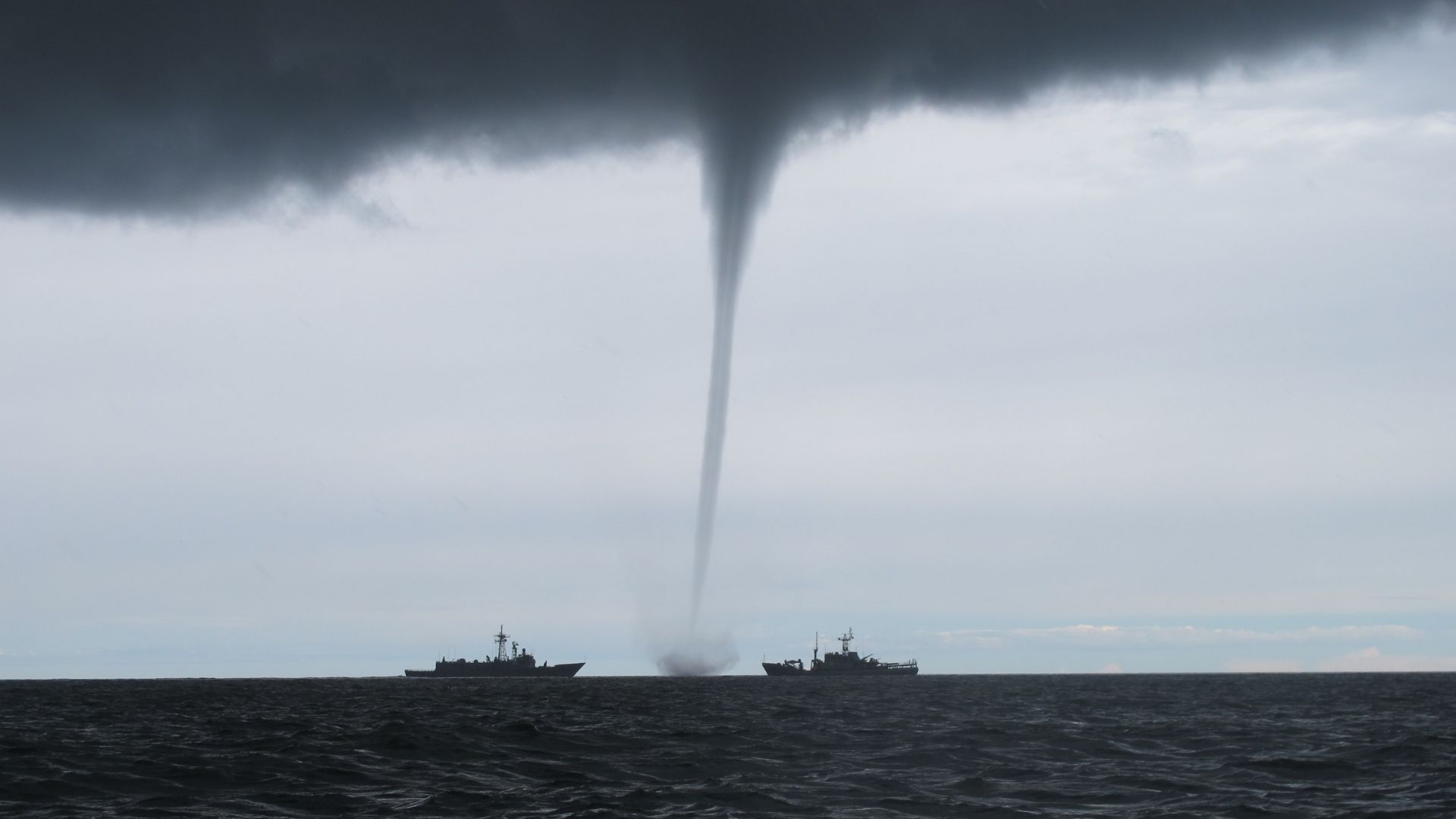
El Niño is a periodic warming of surface waters in the central and eastern Pacific Ocean. It may sound benign now, especially if you don’t understand the wider impact. In practice, it rewrites the weather rulebook for the entire planet.
During an El Niño event, Southern Africa and South Asia can face crippling droughts, Australia bakes under extreme heat, Peru and East Africa see severe flooding, the Atlantic hurricane season shifts off course, and European winters turn warmer and wetter than usual. In short, every region that runs on predictable weather suddenly doesn’t have any.
The 2023 – 2024 El Niño event was one of the strongest on record. Global average temperatures hit record highs, crop failures cascaded across three continents, insurance claims spiked and supply chains buckled.
And yet, by and large, organisations were still surprised.
The harvest that didn’t happen
Let’s talk about food, because nothing makes the abstract concrete quite like a supermarket shelf that’s half empty.
El Niño events have historically hammered global agriculture. Rice yields in Indonesia and the Philippines collapse during drought years. Wheat production in Australia, one of the world’s major exporters drops sharply. Coffee crops in Central America, cocoa in West Africa, maize across southern Africa are all vulnerable, all affected, all felt eventually by organisations and consumers thousands of miles away.
During the 1997 – 1998 El Niño which is still used as a benchmark for severity even now, global economic losses were estimated at over $45 billion. The 2015 – 2016 event triggered food insecurity for more than 60 million people across Africa, Asia and Latin America.
The IPCC has warned with high confidence that extreme weather will push some current food-growing areas beyond the safe climatic space for production, raising the risk of ‘multi-breadbasket failures’ where droughts and extremes hit several growing regions at once. And these aren’t rare anomalies; sudden food production losses have become increasingly frequent since at least the mid-20th century.
If your organisation relies on any global supply chain, ingredients, raw materials, packaging, or logistics, El Niño is not just a weather story. It’s also a business continuity story.
The supply chain domino effect nobody mapped
Here’s how it plays out in practice. A drought in a key agricultural region reduces crop yields, which in turn makes commodity prices spike. Food manufacturers scramble for alternatives, and logistics networks, already under pressure from weather-related disruption elsewhere, become congested. Lead times stretch and prices rise. And the organisations that didn’t see it coming, the one that had a single supplier, no contingency stock, and no early warning process, is suddenly in crisis.
What makes El Niño particularly brutal is the ‘double-whammy’ effect. It doesn’t hit one region it hits multiple growing regions at the same time, in different ways. Drought here, flooding there, storms somewhere else, Climate scientists call it a ‘compound event.’
Procurement teams call it a nightmare.
None of this is unpredictable, all of it was foreseeable. The El Niño forecast and historical data existed. The gap was in turning that information into action.
This is where crisis preparedness earns its keep, it’s not after the disaster, but in the months before it, when there’s still time to do something useful that organisations still miss.
Five things genuinely prepared organisations do differently
1. They monitor the forecast, not just the weather
NOAA, the UK Met Office and the World Meteorological Organisation publish El Niño outlooks months ahead. Resilient organisations have someone whose job it is to watch these signals and brief leadership when patterns are forming.
2. They map their supply chain two tiers deep.
Most businesses know their direct suppliers. Fewer know where those suppliers’ source from. El Niño disruptions often hit at tier two or three, the farm, the port, the regional distributor and ripple upward invisibly until they land on your desk as a problem with no obvious cause. Map it now before it matters.
3. They build in buffers before the crunch.
Strategic stock, alternative supplier agreements, flexible contracts, these are significantly cheaper to arrange in calm conditions than in the middle of a global commodity squeeze. The organisations that come through El Niño events relatively unscathed usually made boring, unglamorous decisions about inventory and supplier diversity eighteen months earlier.
4. They have a decision-making structure that works under pressure.
When supply chains are disrupted and costs are rising simultaneously, organisations need to make fast, consequential decisions. Who has the authority? Who needs to be in the room? What’s the threshold for escalating to the board? Organisations that have worked this out in advance move faster and make better and more informed decisions than those improvising the governance in real time.
5. They communicate early with customers, staff and stakeholders.
If disruption is coming, your customers would rather hear it from you in advance than discover it when their order doesn’t arrive. Early, honest communication during a supply disruption builds more trust than silence followed by a scrambled apology. This is crisis communications 101 and it’s remarkable how often it still doesn’t happen.
El Niño as an alibi. Your honour, we’d like to plead the weather
Every year, in post-incident reviews and insurance claims and carefully worded shareholder communications, organisations reach for the same get-out-of-jail-free card: ‘unprecedented weather event.’
It’s a compelling alibi, weather sounds blameless, like something that just… happened. Weather does not imply that anyone left a gap in the supply chain big enough to drive a lorry through.
Here’s the problem with that alibi when it comes to El Niño, the forecast was public with historical data fully available. Scientists had been waving their arms about it for months. El Niño is not a surprise witness it’s been on the evidence list the whole time.
In any honest post-incident review, the real verdict isn’t ‘caused by extreme weather.’ It’s caused by extreme weather, combined with a preparedness gap we chose not to close.
Case dismissed. Do better next time.
The forecast is already out there. The question is what you do with it
Climate scientists are already modelling the next El Niño cycle. The signals will emerge, and the briefings will be published. And somewhere, an organisation that took this seriously will be quietly adjusting its supply agreements, reviewing its continuity plans and briefing its leadership team while everyone else waits to see what happens.
Crisis management and business continuity preparedness isn’t about being pessimistic, it’s about being ready. There’s a version of your organisation that weathers El Niño better than your competitors, maintains supply to your customers, and comes out the other side with its reputation intact.
That version of your organisation started preparing before the headlines arrived.
If you’d like to understand how exposed your organisation really is, before the next forecast, get in touch and let’s have a conversation. We don’t want our morning coffee disappearing either.